Minimum tank footprint for adult Polar Blue Parrot Cichlid
Polar Blue Parrot Cichlid needs at least 30 gallons before tank mates, decor displacement, or group-size pressure are added.
Add Polar Blue Parrot Cichlid to the visual aquarium planner
Starts with one fish in an editable 30 US gal example. Set your actual tank size and species group counts before drawing conclusions.
hybrid cichlid compatibility profile. Find the best tank mates by checking water parameters, aquarium swim zone pressure, social rules, and pair-by-pair shrimp-safety checks.
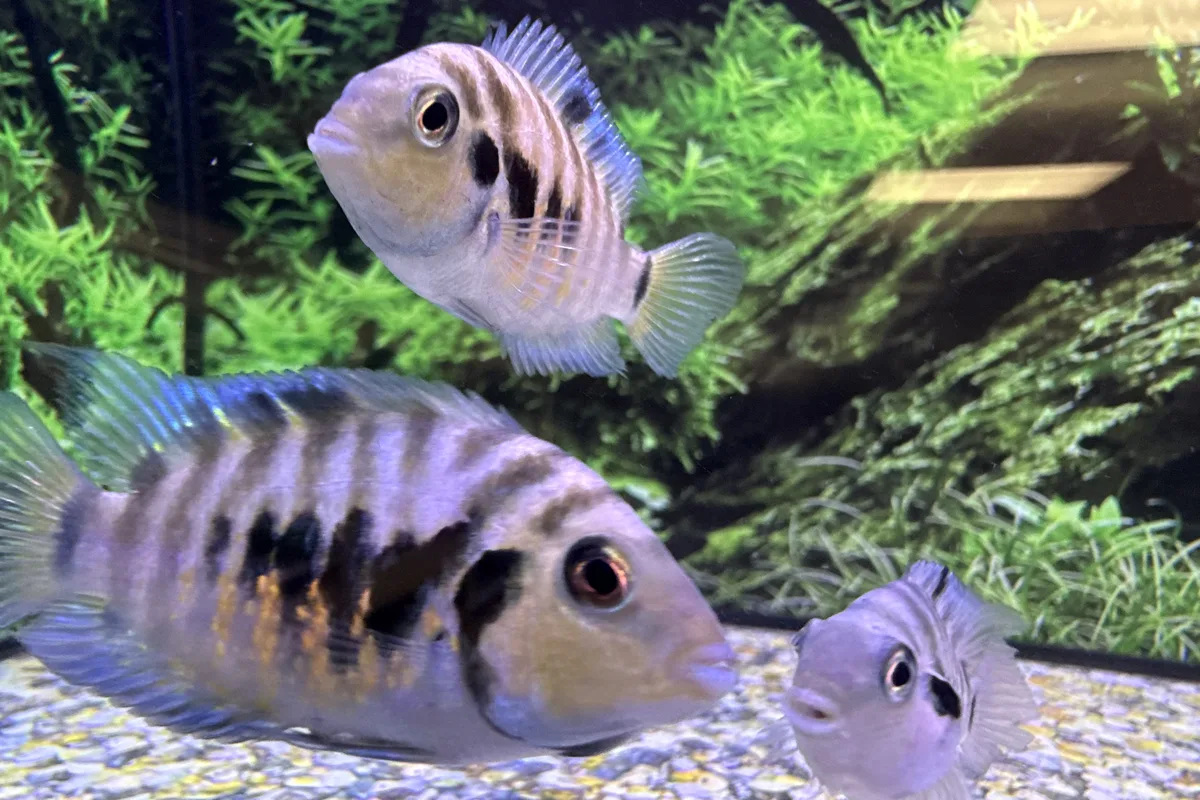


When planning a community around Polar Blue Parrot Cichlid, consider the aquarium swim zone pressure. This species primarily occupies the middlebottom zone. Because Polar Blue Parrot Cichlid is territorial and defends that zone as it matures, do not balance the setup with more fish competing for the same space — choose calm tank mates that stay out of the middle and bottom zone instead, and check each pairing with the compatibility checker before mixing.
Polar Blue Parrot Cichlid needs at least 30 gallons before tank mates, decor displacement, or group-size pressure are added.
Aquascape style cannot compensate for a tank that is too small. Match the adult footprint, social group, and filtration first, then choose plants or hardscape.
Programmable sunrise and sunset ramps are optional, but gradual lighting can reduce startle behavior in tanks with open swimming lanes or skittish community fish.
Keep the heater inside the listed range of 76-82F; breeding attempts should favor stability over chasing the warmest possible number.
Match flow to swim zone and body shape. If Polar Blue Parrot Cichlid avoids open water, clamps fins, or hides behind hardscape, reduce direct current and add calmer feeding areas.
Favor tank mates with overlapping temperature, pH, hardness, temperament, and swim-zone use instead of mixing fish only because they share a broad region or store display tank.
Plant safety is marked as caution. Even plant-safe fish can disturb carpets if they dig, graze aggressively, or crowd the foreground during feeding.
Use botanicals only when the softer, tinted-water style fits the species water range. Keep pH and hardness inside the listed limits instead of dropping them quickly for appearance.
Iwagumi layouts leave fewer visual barriers, so choose peaceful tank mates and avoid territorial species that need caves, dense stems, or broken sightlines.