Can betta and guppy live together?
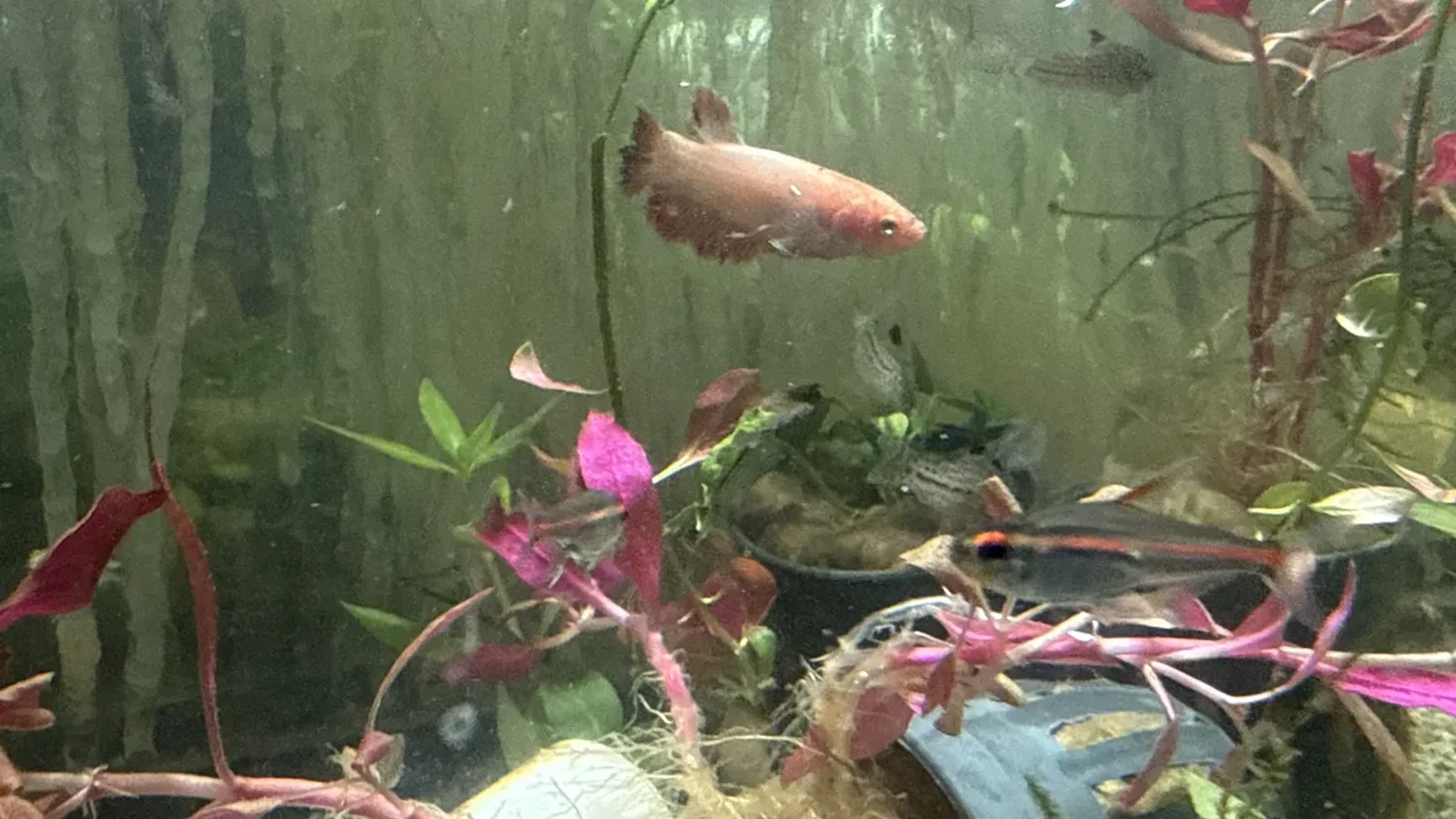
Short answer: sometimes, but only with caution. A betta and guppies can share a tank under specific conditions, but this pairing carries real risk: long fins and bright color can trigger betta aggression or fin nipping, and outcomes vary heavily by individual fish. Treat it as a yellow-light decision with a ready backup plan, not a safe default.
Short answer
Short answer: sometimes, but only with caution. A betta and guppies can share a tank under specific conditions, but this pairing carries real risk and should be treated as a yellow-light decision, not a safe default. Long fins and bright color can trigger betta aggression or guppy fin nipping, and outcomes vary heavily by individual fish. If you want a confident green light, this is not the combination to pick. If you understand the risks and can prepare a larger planted tank plus a backup plan, read on.
Quick verdict
| Factor | Result |
|---|---|
| Overall decision | Yellow - caution only |
| Main risks | Fin nipping, aggression |
| Temperature overlap | 76-82 degrees F |
| pH overlap | 7.0-7.8 |
| Minimum tank | 10 gallons (guppy floor); larger strongly preferred |
| Backup plan required | Yes |
Use the stocking calculator to size the tank before committing to this pairing.
What the species data says
Betta (Betta splendens)
Adult size: 3 inches - Minimum tank: 5 gallons - Temperature: 76-82 degrees F - pH: 6.5-7.8 - Temperament: aggressive - Diet: carnivore - Social behavior: solitary; recommended group minimum of 1 - Caveat: Keep one male per tank. Two males fight, and males with females typically need a sorority-style setup with planning and backup tanks. More detail on the betta species page.
Guppy (Poecilia reticulata)
Adult size: 2.25 inches - Minimum tank: 10 gallons - Temperature: 72-82 degrees F - pH: 7.0-8.2 - Temperament: peaceful - Diet: omnivore - Social behavior: group; recommended group minimum of 3 - Caveat: Livebearer that breeds quickly - plan for fry, expect rapid population growth, and have a separation or rehoming plan if you keep mixed sexes. More detail on the guppy species page.
Where the water parameters overlap
Both species can be kept inside the same window, but it is narrower than each species alone.
| Parameter | Betta | Guppy |
|---|---|---|
| --- | --- | |
| --- | Temperature | |
| 72-82 degrees F | 76-82 degrees F | |
| 6.5-7.8 | 7.0-8.2 | 7.0-7.8 |
| Hardness (GH) | 3-12 dGH | 8-20 dGH |
8-12 dGH | You must hold the tank inside the shared 76-82 degrees F, pH 7.0-7.8, and GH 8-12 dGH windows. That removes some of the flexibility you would otherwise have keeping either species alone.
Why this is a yellow-light pairing
The compatibility ruleset flags two specific risks for this combination: - Fin nipping risk - Guppies, especially fancy males with flowing tails, can have their fins nipped. They may also nip a betta's fins if they get curious or crowded. - Aggression risk - Bettas are wired to react to bright color and flowing fins. Male guppies look a lot like rival bettas to a betta's eyes. Temperament varies by individual fish. Some bettas tolerate tankmates; others will not. There is no reliable way to know in advance which betta you have until you try, which is why a backup plan is non-negotiable.
Conditions that improve the odds
If you decide to attempt this pairing, stack as many of these in your favor as possible: - Bigger tank than the minimums. The 5-gallon and 10-gallon minimums are floor values for each species alone. For a mixed setup, go larger so fish can establish space. - Heavy planting and hiding spots. Sightlines matter. Plants, driftwood, and caves let guppies break line of sight from the betta. - Female guppies or less-flashy males. Long, brightly colored male guppy tails are the strongest trigger for betta aggression and the easiest target for nipping. - A keep-an-eye-on-it period. Watch closely for the first week or two. Flared gills, chasing, torn fins, or hiding are warning signs. - A backup tank ready to go. If it doesn't work, you need somewhere to move fish immediately - not "next weekend." - Plan for guppy fry. Guppies breed quickly. Decide ahead of time whether the betta will eat fry, whether you want to grow them out separately, or whether you keep only one sex.
Warning signs: separate immediately
Do not wait for a pattern to settle. Separate the fish the same day if you see any of these: - Repeated chasing or cornering of guppies by the betta. - Flared gills directed at tank mates. - Torn, nipped, or clamped fins on either fish. - Guppies hiding constantly or refusing food. - The betta guarding one zone and driving other fish out of it. Move one species to the backup tank first and troubleshoot second; fin damage and stress escalate faster than a new setup can be cycled.
When to skip this pairing
Don't attempt it if any of these are true: - The tank is at or near the 10-gallon minimum with no room to upgrade. - You only have male fancy guppies with long, bright tails. - You can't set up a backup tank. - Your betta has already shown aggression toward tankmates. - You need a reliably low-risk community - pick a different combination. For a full decision walkthrough, see Can betta live with guppy?
Conditions and caveats
- Betta adult size: 3 in; minimum tank: 5 gallons.
- Betta temperature range: 76-82 F; pH range: 6.5-7.8.
- Betta GH range: 3-12 dGH.
- Betta temperament: aggressive; diet: carnivore.
- Betta social behavior: solitary; recommended group minimum: 1.
- Data caveat: Keep one male per tank; two males fight, and males with females typically need a sorority-style setup with planning and backup tanks.
- Guppy adult size: 2.25 in; minimum tank: 10 gallons.
- Guppy GH range: 8-20 dGH.
- Guppy temperature range: 72-82 F; pH range: 7-8.2.
- Guppy temperament: peaceful; diet: omnivore.
FAQ
Is this a low-risk stocking idea?
Only if the article's conditions are satisfied. Treat any aggression, predation, size, or parameter warning as a reason to slow down and plan the setup before adding animals.
What should I check before stocking?
Check tank size, group size, temperature overlap, pH overlap, diet, temperament, and whether the setup has enough cover or territory for the species involved.
What is the backup plan?
Have a cycled, heated separation option ready before trying a conditional pairing. If chasing, hiding, fin damage, refusal to feed, or repeated stress behavior appears, separate the animals rather than waiting for the pattern to resolve on its own.
Compatibility claim limits
Allowed claims
- Use exact species and invertebrate facts from repository data.
- State compatibility as conditional where risk exists.
- Include tank size, group size, water-parameter overlap, and behavior caveats.
- Keep freshwater fish-welfare guidance conservative.
Not allowed
- No marine, reef, or saltwater content.
- No unconditional compatibility or absolute safety claims.
- No veterinary or medical treatment advice.
- No species outside the supporting data files.